Meta-analyses should try to correct not just for publication bias, but also for p-hacking.
Some estimates are more likely to be reported than others, so every good summary of research should correct for this publication bias. In case you're wondering — yes, this can be done, there are dozens of methods and decades of research on this. There is even a great way to put these different correction techniques together: see RoBMA by František Bartoš and colleagues.
The problem is that these techniques assume that the reported estimates are individually unbiased. This is a strong assumption, as researchers can tweak models (consciously or unconsciously) to get more "sensible" results. This is called p-hacking. Most of us do it.
In our recent Nature Communications paper we show that under some forms of p-hacking, classical models correcting for publication bias can actually be more biased than a simple average of published estimates.
As far as I know, there are only two meta-analysis corrections for (some forms of) p-hacking: our MAIVE (from the Nature Comms paper) and RTMA by Maya Mathur. If you know of more, please let me know in the comments!
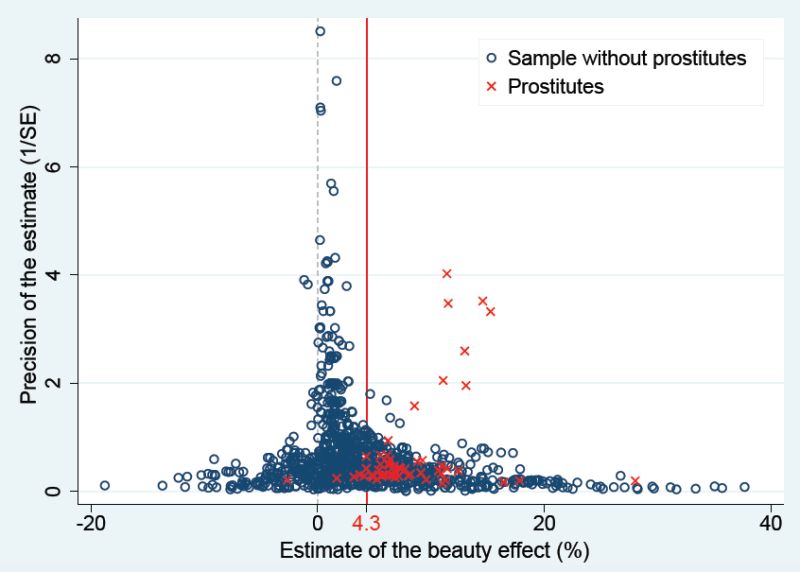
If you want to see MAIVE and RTMA applied, take a look at our meta-analysis of the beauty premium. Spoiler: apart from the sex industry, beauty doesn't matter much in the labor market.
Links the author added in the comments: